

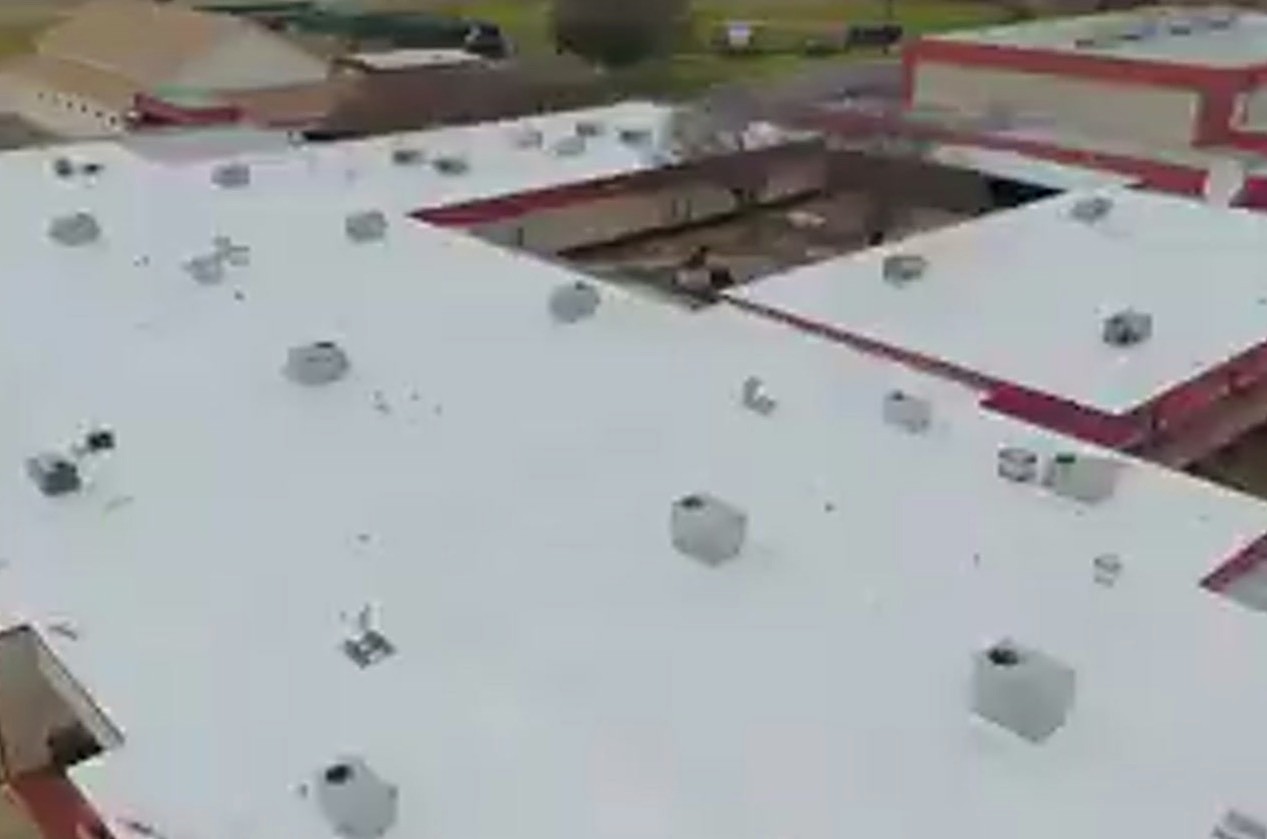
Do I have to maintain a commercial roof to keep the warranty?
Generally yes. Manufacturer warranties on commercial roofing systems commonly require regular inspection and maintenance, and require the owner to be able to show it was done. An owner who has never had the roof looked at can find the warranty they were counting on is not in force at the moment they need it.
The warranty is a contract with conditions in it
A manufacturer warranty on a commercial roofing system is not a promise that the roof will not leak. It is a contract that sets out what the manufacturer will do, under what circumstances, and what the owner has to do in return.
The owner obligations usually include regular inspection, keeping drains clear, repairing damage promptly, using compatible materials for any repair, and notifying the manufacturer within a set period of discovering a problem. Several of those are easy to breach without noticing.
The most common breach is the simplest. Nobody inspected the roof, so nobody can show it was maintained, and there is no record to produce when the claim is made.
What a visit is actually looking for
Not leaks. By the time a roof is leaking, the maintenance conversation is over and the repair conversation has started. A maintenance visit is looking for the things that will become leaks: a seam beginning to lift at an edge, a pitch pan whose sealant has dried and shrunk, a drain collecting debris, a pipe boot splitting, sealant failing along a coping joint, a lap that was never fully welded.
It is also looking for damage somebody else caused. Mechanical contractors walk commercial roofs, and a service technician dragging a toolbox or dropping a panel leaves marks that nobody reports.
Buying a building with no roof records
This is the situation that costs the most. A property changes hands, the roof has a warranty on paper, and there is no maintenance record at all, so the warranty may or may not be in force and nobody can say which.
The way out is a condition assessment: somebody walks the whole roof, documents its condition in writing with photographs, and that becomes the baseline. Anything urgent is separated from anything that can be budgeted, and from that point there is a record.
It is also the point at which an honest answer can be that the roof is near the end of its life and the warranty question is academic. That is worth knowing in year one of ownership rather than year four.
What maintenance is worth in money
The arithmetic is not subtle. A lifted seam caught early is a repair to a seam. The same seam in three years is a repair to the membrane, the insulation that has been wet for two winters, and often the deck, plus whatever it did to the tenant space underneath and whatever the tenant does about that.
Deferred roof maintenance is one of the few building expenses that reliably multiplies rather than merely accruing.
Related questions
How often should a commercial roof be inspected?
Plans commonly run on a schedule through the year with an additional visit after significant storms. The right frequency depends on the system, its age, and how much equipment and foot traffic the roof carries.
Can somebody other than the original installer maintain it?
Usually, provided the work is done to the manufacturer’s requirements with compatible materials. Using the wrong sealant on a warranted system is one of the ways a warranty gets voided by accident.
What if the roof already has damage?
Then the first visit is a condition assessment rather than a maintenance visit, and the outcome is a repair scope with a price before anything else is scheduled.